
Principal Awards


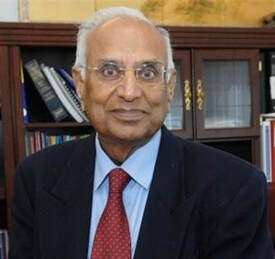
kim burchiel bodjqu2v

John Raaf Professor and Chairman Emeritus, Department of Neurological Surgery; Head, Division of Functional Neurosurgery — Oregon Health & Science University, Oregon

Biography

Kim James Burchiel was born in 1950 in Holyoke, Massachusetts. After grade school education in Massachusetts and Connecticut, the family moved to Redding, California. His undergraduate education was at the University of California, Davis, majoring in Biochemistry and Genetics. He then went to medical school at the University of California, San Diego graduating in 1976. He completed his surgical internship at the UCLA/Harbor General Hospital in Torrance, California and entered neurosurgical residency at the University of Washington. There Dr. Burchiel’s interest in functional neurosurgery was established with a specific interest in pain, functional neurosurgery, and epilepsy surgery. Dr. Burchiel remained on the staff of the University of Washington and Chief of Neurosurgery at the Seattle VA Medical Center. In 1988, Dr. Burchiel accepted the position of Professor and Head of the Division of Neurosurgery at Oregon Health Sciences University in Portland and later in 1997 the Department of Neurological Surgery was established at OHSU. Dr. Burchiel served as the Raaf Professor and Chairman of the OHSU Department of Neurological Surgery from 1997-2015. He has now trained over 50 fellows in Functional and Stereotactic Neurosurgery. His major clinical interests are in Deep Brain Stimulation (DBS) for movement disorders and other conditions, and the surgical treatment of pain, particularly trigeminal neuralgia. His research interests are concerned with the physiology of nociception and neuropathic pains, including trigeminal neuralgia, the neurosurgical treatment of movement disorders, epilepsy surgery, image-guided neurosurgery. He has published over 350 peer-reviewed articles and chapters, and his six published textbooks include the Surgical Management of Pain (1st and 2nd editions), Spinal Cord Injury Pain: Assessment, Mechanisms, Management, Microelectrode Recording in Movement Disorder Surgery, Handbook of Pain Surgery, and Functional Neurosurgery and Neuromodulation. He and his wife, Debra, have three children, and live in Portland, Oregon.

Past Recipients
2026Kim Burchiel, MD, FACS
2025Nagy Mekhail, MD, PhD
2024Sam Eldabe, MB ChB, FRCA, FFPMRCA
2023Ali Rezai, MD
2022J. Thomas Mortimer, PhD
2021Lisa Stearns, MD
2020Hunter Peckham, PhD
2019Peter Staats, MD, MBA, DABA, ABIPP, FIPP
2018Robert Foreman, PhD
2015Tony Yaksh, PhD
2014Alim-Louis Benabid, MD, PhD
2013Giancarlo Barolat, MD
2012Bengt Linderoth, MD, PhD | Joshua Prager, MD, MS
2011Elliot Krames, MD
2010Michael Stanton-Hicks, MD, MBBS
2009Richard North, MD
2007Norman Shealy, MD, PhD
2006John Oakley, MD
2002Prithvi Raj, MD | Gabor Racz, MD
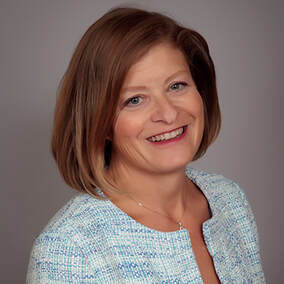
julie pilitsis cdlc80t3

Chair, Department of Neurosurgery; Physician Executive, Functional Neurosurgery — University of Arizona & Banner Health System, Arizona

Biography

Kim James Burchiel was born in 1950 in Holyoke, Massachusetts. After grade school education in Massachusetts and Connecticut, the family moved to Redding, California. His undergraduate education was at the University of California, Davis, majoring in Biochemistry and Genetics. He then went to medical school at the University of California, San Diego graduating in 1976. He completed his surgical internship at the UCLA/Harbor General Hospital in Torrance, California and entered neurosurgical residency at the University of Washington. There Dr. Burchiel’s interest in functional neurosurgery was established with a specific interest in pain, functional neurosurgery, and epilepsy surgery. Dr. Burchiel remained on the staff of the University of Washington and Chief of Neurosurgery at the Seattle VA Medical Center. In 1988, Dr. Burchiel accepted the position of Professor and Head of the Division of Neurosurgery at Oregon Health Sciences University in Portland and later in 1997 the Department of Neurological Surgery was established at OHSU. Dr. Burchiel served as the Raaf Professor and Chairman of the OHSU Department of Neurological Surgery from 1997-2015. He has now trained over 50 fellows in Functional and Stereotactic Neurosurgery. His major clinical interests are in Deep Brain Stimulation (DBS) for movement disorders and other conditions, and the surgical treatment of pain, particularly trigeminal neuralgia. His research interests are concerned with the physiology of nociception and neuropathic pains, including trigeminal neuralgia, the neurosurgical treatment of movement disorders, epilepsy surgery, image-guided neurosurgery. He has published over 350 peer-reviewed articles and chapters, and his six published textbooks include the Surgical Management of Pain (1st and 2nd editions), Spinal Cord Injury Pain: Assessment, Mechanisms, Management, Microelectrode Recording in Movement Disorder Surgery, Handbook of Pain Surgery, and Functional Neurosurgery and Neuromodulation. He and his wife, Debra, have three children, and live in Portland, Oregon.

Past Recipients
2026Julie Pilitsis, MD, PhD
2025Salim Hayek, MD, PhD
2024Peter Konrad, MD, PhD
2023Lawrence Poree, MD, PhD
2022B. Todd Sitzman, MD
2021Ashwini Sharan, MD
2020Jaimie M. Henderson, MD
2019Richard North, MD
2018Joshua Prager, MD, MS
2017David Kloth, MD
2014David Caraway, MD, PhD
2013Robert Foreman, PhD
2011K. Dean Willis, MD
2005Sam J. Hassenbusch, MD

Recognition Awards


NANS APP Excellence Award

Recognizes one APP member’s outstanding achievements and leadership in neuromodulation and pain management. Recipient receives recognition at the Annual Meeting, a monetary award, and complimentary registration.


Eligibility: Full-time clinician APP, NANS member in good standing, prior Annual Meeting attendee.

blake parente hw3hvpmn

Physician Assistant — Duke University Medical Center, North Carolina

Biography

Blake Parente is a Physician Assistant (PA) at Duke University Medical Center specializing in functional neurosurgery and treating high impact pain. For almost 15 years, Parente has worked on expanding pain modulation and functional ablative procedures across a variety of new neurological indications and is excited to be collaborating on multiple projects involving interdisciplinary care and spinal cord injury. Parente holds a Master of Health Sciences from the Duke University Physician Assistant Program and a Bachelor of Arts in Neuroscience from Smith College. They have recently completed a Certificate in Health Professions Education & Teaching Program. They have been affiliated with Duke since 2005.

Past Recipients
2026Blake Parente, MHS, PA-C
2025Chelsey Hoffman, PA-C, MS, RD

NANS Innovator Award

Honors mid-career professionals (5–15 years post-training) advancing neuromodulation through creativity, originality, and measurable impact across clinical practice, technology, education, advocacy, research, or access to care.


Eligibility: Open to all disciplines. Includes complimentary registration, hotel accommodation, and recognition at the Annual Meeting.

shadi dayeh cpriqaeb

Professor, Department of Electrical & Computer Engineering — University of California San Diego, California

Biography

Shadi A. Dayeh is Professor of Electrical & Computer Engineering at UC San Diego, with affiliated roles in NanoEngineering, Bioengineering, Materials Science & Engineering and Neurological Surgery. He obtained his undergraduate degree in Physics/Electronics at the Lebanese University in Beirut, the MS degree from Southern Methodist University, and the PhD degree from UC San Diego, both in Electrical Engineering. He received the NIH Director’s New Innovator Award (2019), ISCS Young Scientist Award (2018), NSF CAREER (2014), Jacobs School Teacher of the Year – ECE (2015), and LebNet Bireme Technologist of the Year (2021). Earlier, he was a Director’s Postdoctoral Fellow and J. R. Oppenheimer Distinguished Fellow at Los Alamos National Laboratory. His group’s work spans PtNR-based, ultra-dense human brain interfaces, flexible depth electrodes, Brain-iEEG visualization, and safety limits for stimulation—culminating in an FDA IDE for a 1,024-channel intraoperative platform and >100 patient uses across three centers. He co-leads a $12.25M NIH UG3/UH3 consortium on high-channel wireless systems and serves as Neuromodulation Architect for ARPA-H Transplantation of Human Eye Allografts.

Past Recipients
2026Shadi Dayeh, PhD
2025Andres Lozano, MD, PhD, FRCSC, FRSC, FCAHS (Clinical)
2024Dominique Durand, MS, PhD (Engineering) | Helen S. Mayberg, MD (Clinical)
2023Warren Grill, PhD

Distinguished Achievement in Science & Technology

Celebrates scientists and engineers whose work has fundamentally advanced understanding, tools, and capabilities — from cellular mechanisms and BCIs to electrode design, imaging, signal processing, and algorithmic advances.


Eligibility: Open to any career stage, discipline, or geographic region. Includes complimentary registration, hotel, and recognition.

cameron mcintyre bpzwyr7s

Professor, Biomedical Engineering & Neurosurgery — Duke University, North Carolina

Biography

Cameron McIntyre is a Professor of Biomedical Engineering and Neurosurgery at Duke University. He received his BS and PhD in Biomedical Engineering from Case Western Reserve University (CWRU) in 1997 and 2001, respectively. His doctoral research studied the biophysics of neural stimulation, and he performed post-doctoral training in clinical deep brain stimulation (DBS) at Johns Hopkins University and Emory University. His independent research career started at the Cleveland Clinic in 2003. The lab moved to CWRU in 2013, and then transitioned to Duke in 2021. The special expertise of the group resides in the theoretical, experimental, and clinical application of neuromodulation and neurorecording technologies in human patients. In addition, they are well known for developing software tools that integrate advanced computational models with brain imaging data. Dr. McIntyre has lead 12 different National Institutes of Health (NIH) research grants and authored ~150 peer-reviewed research papers. Those scientific results have enabled him to co-found 4 successful neurotechnology companies.

Past Recipients
2026Cameron McIntyre, PhD

NANS Rising Star — Early Career Award

Recognizes two individuals with a track record of contributions and success in neuromodulation, within five years of completing training. These future leaders are ones to watch.


Eligibility: Within 5 years post-training. Award + monetary grant.

matthew chung cvp0a7ql

MD Anderson Cancer Center, Texas

saba javed cdxjstc2

MD Anderson Cancer Center, Texas

Past Recipients
2026Matthew Chung, MD | Saba Javed, MD
2025Manish Ranjan, MD | Ilknur Telkes, PhD, MS
2024Ryan S. D’Souza, MD | Nicole (Nikki) Pelot, PhD

NANS Rising Star — Resident Award

Honors residents who demonstrate dedication and growth, considered leaders among their peers and showing exceptional promise as neuromodulators.


Eligibility: Recipients receive an award and a monetary grant.

david gallacher 5lu7uaz

Resident — University of Colorado School of Medicine, Colorado

tessa harland camoc4dt

Resident — Albany Medical College, New York

Past Recipients
2026David Gallacher, MD | Tessa Harland, MD
2025Harman Chopra, MD | Crystal Joseph, MD
2024Ahish Chitneni, DO | Danika Paulo, MD

NANS Rising Star — Fellow Awards

Honors fellows who demonstrate dedication and growth, considered leaders among their peers and showing exceptional promise as neuromodulators.


Eligibility: Recipients receive an award and a monetary grant.

ahish chitneni cbbh6iwh

Fellow — University of California Irvine, California

rosalynn conic cycm53m8

Fellow — Mayo Clinic, Florida

Past Recipients
2026Ahish Chitneni, DO | Roslaynn Conic, MD, PhD, MPH
2025Mustafa Broachwala, DO | Eva Kubrova, MD
2024Alexandra Moreira, MD | Shashank Vodapally, DO

Named Legacy Awards


krishna kumar bux0gc z

Awardee shares an overview of their manuscript at the Saturday plenary. Submit a published or research manuscript on neuromodulation as first author. Includes complimentary registration, monetary grant, travel, and hotel.

iahn cajigas daicj3sd

Assistant Professor, Neurosurgery & Bioengineering — University of Pennsylvania, Pennsylvania

Past Recipients
2026Iahn Cajigas, MD, PhD
2025Nicole Provenza, PhD
2024Prasad Sirvalkar, MD, PhD
2023Ilknur Telkes, PhD
2022Patrick Ganzer, PhD
2021Lee E. Fisher, PhD
2020Alik S. Widge, MD, PhD
2019Mallory L. Hacker, PhD
2018Dario J. Englot, MD, PhD
2017Scott Lempka, PhD
2015Casey H. Halpern, MD
2014Sridevi V. Sarma, PhD
lisa stearns bjqcsfrx

Open to applicants with 5+ years in the field. Recipient presents at the Saturday plenary. Includes complimentary registration, monetary grant, travel, and hotel.

arti ori bquyo3ca

Pain Management Physician & Anesthesiologist — Mass General Brigham, Massachusetts

Biography

Dr. Arti Ori is a senior faculty member in the Pain Division Mass General Brigham, Harvard Medical School and has dedicated over fourteen years to advancing pain medicine through clinical excellence, education, and research. She completed her surgery internship, anesthesiology residency, and pain fellowship at the Brigham, where she now leads the Intrathecal Pump Program and is nationally recognized for targeted drug delivery and neuromodulation. Dr. Ori chairs the Education Committee for the Women Innovators in Pain Medicine Society, receiving its 2024 Mentorship and 2025 Education Awards, and directs national cadaver labs and surgical training workshops. She mentors fellows through NANS, WIPM, and the Medtronic Accelerate Program, fostering technical mastery and professional growth. A passionate educator, she emphasizes evidence-based learning and multidisciplinary collaboration. Dr. Ori serves as Principal Investigator on multiple clinical trials and her goal is to advance the management of cancer pain through cutting edge research and innovation. She is also active in advancing diversity and inclusion serving on the Fellowship Recruitment and Community Engagement Committees. Her vision centers on developing compassionate, innovative, and scholarly pain physicians prepared to lead the next generation of the field.

Past Recipients
2026Arti Ori, MD
2025Saba Javed, MD
2024Vinita Singh, MD, MSCR
2023Magdalena Anitescu, MD, PhD
2022Sandy Christiansen, MD
2021Amitabh Gulati, MD

Next Generation Grants


DOC Pipeline Fellowship Grants

Supports early career professionals and trainees from underrepresented backgrounds. Recipients receive complimentary registration, monetary grant, and hotel accommodations, and engage with the Diversity & Outreach Committee following the Annual Meeting.

Past Recipients
2026Ashlyn Brown, MD, MBA, MS | Barbara Buccilli, MD | James Mossner, MD, MS | Rahil Soroushmojdehi, PhD, MS | Rebecca Takele, DO
2025Varina Clark Onwunyi, MD | Rachel Esparza, MD | Oranicha Jumreornvong, MD | Anthony Kilgore Jr., MD | Wutt Hmone Kyi, BS
2024Rodrigo Aguiar, MD | Efemena Diejomaoh, MD, MBBS | Luis Ruiz Perez, BS, MS | Fabienne Saint-Preux, MD | Tess Veuthey, MD, PhD
2023Meagan Brucker-Hahn, PhD | Victor Ekuta, MD | Tessa Harland, MD | Trevor Johnson, MD | Edgar Peña, PhD

Early Career Travel Fellowship Grants

Provides financial support to NANS members in training or early in their career to attend the Annual Meeting. Abstract submission is encouraged but not required.